SEDA-COG HDC Awarded $1.7M in LIHTC for New Clinton County Property

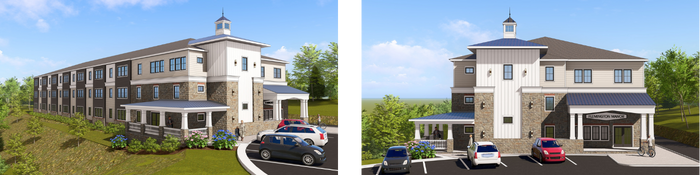
                Rendering shows the planned building and grounds of Flemington Manor in Clinton County, Pa.
                
(Courtesy of Architectural Concepts, PC)

Lewisburg, PA — The SEDA-Council of Governments (SEDA-COG) Housing Development Corporation (HDC) has been awarded $1.7 million Low Income Housing Tax Credits (LIHTC) through the Pennsylvania Housing Finance Agency (PHFA). Additionally, PHFA conditionally reserved $1,544,557 In PennHOMES funds for the project.

This Award will be used to build Flemington Manor, a 46-unit affordable housing complex for income-eligible residents age 62 and older in Clinton County. The property will sit next to Susquehannock Heights, which was placed in service by the HDC in January of 2021.

Architectural Concepts is the architect for development, and T-Ross Brothers Construction, Inc will serve as the general contractor. The Clinton County Housing Authority, who currently manages Susquehannock Heights, will manage day-to-day operations under HDC oversight.

The HDC has secured a limited partnership with three local investors, Woodland Bank, First Citizens Community Bank, and Journey Bank, who together are committing a total equity investment of $15 million to the project.

Additional funding will be provided from the Clinton County Commissioners, Clinton County Housing Authority, Flemington Borough’s waiver of in tap-in fees, and the HDC.

“The Clinton County Commissioners are proud to support the development of Flemington Manor and are grateful for PHFA’s investment in this important project,” said the Clinton County Commissioners in a joint statement.

They added, “Affordable, age-friendly housing is a critical need in our community, and this funding represents a meaningful step forward for Clinton County’s senior residents. Through both financial support and strong partnerships with local, regional, and financial stakeholders, this project will provide safe, high-quality, and affordable housing options for individuals living on fixed incomes, while strengthening the Flemington community as a whole.”

The HDC expects to close on the deal with PHFA in Fall of 2026. Construction is expected to begin shortly after closing and will take about 16 months.

The 46-unit, 48,265-square-foot, three-story structure will offer 42 one-bedroom units, four two-bedroom units, and 4,305 square feet of community space.

“We are thrilled to bring more units to Clinton County,” said Kim Wheeler, SEDA-COG executive director and board president of the HDC. “Affordable housing continues to be a critical need in our region. We are thankful to PHFA for awarding the LIHTC to Flemington Manor and providing us the opportunity to bring more safe, quality, affordable housing to Clinton County. We look forward to moving this project forward and continuing this important work.”

About SEDA-COG
SEDA-COG is a community and economic development agency in Lewisburg and is one of seven Local Development Districts in Pennsylvania. SEDA-COG enhances the quality of life and economic advantage for residents and businesses in the 11 central Pennsylvania counties through its vital partnerships and initiatives.

Preservation Kickoff Celebrates Major Investment in Affordable Senior Housing in Selinsgrove

Photo description: SEDA-COG’s Leslie Osgood joins resident Roberta Meiser and Todd Ross of T-Ross Brothers Construction for the ceremonial first swing of the sledgehammer, marking the start of renovations at Market Street Manor.

Lewisburg, PA – Public officials and development partners gathered Monday, Oct. 6 with the SEDA-Council of Governments (SEDA-COG) Housing Development Corporation (HDC) to celebrate the official kickoff of a major preservation and renovation project at two properties, Market Street Manor and High Street Manor, in Snyder County.

The event marked the beginning of a $13.4 million investment to preserve and improve the housing complexes, ensuring safe, quality, affordable housing remains in our region for years to come.

Without this investment, the long-term viability of the building, and the ability to continue serving our residents, would have been increasingly at risk. This preservation effort safeguards not only the structure of the buildings, but also ensures we can continue to provide affordable, independent living options.

With a growing waitlist of older adults seeking housing, maintaining and improving existing units is essential to meeting community needs and avoiding more costly institutional alternatives.

Renovations are scheduled to be completed by the end of 2026. The project will add 2 new units and include major upgrades to mechanical systems and HVAC. Exterior improvements will feature new roofing, siding, windows, and doors. Interior renovations will include full-size stoves, walk-in showers, new refrigerators, and updated flooring.

While the facility is independent living and does not provide direct care, a robust service plan will be implemented in partnership with the Union-Snyder Area Agency on Aging. This plan will bring supportive services on-site to assist residents with various needs.

An internal rent subsidy will also be introduced to help ensure affordability for very low-income residents.

The celebration featured opening remarks and acknowledgments from Kim Wheeler, executive director of SEDA-COG and chair of the HDC board of directors. Leslie Osgood, rental housing program chief at SEDA-COG, followed with an overview of the project’s scope. Attendees were then invited to share their own reflections and remarks, creating a meaningful moment of connection and shared purpose.

“I’m very excited to be in Selinsgrove this afternoon on behalf of Executive Director Wiessman and PHFA Board of Directors to celebrate the start of the preservation,” stated Logan Minnich, lending analyst at PHFA.

Minnich continued, “PHFA is very happy to be a funder in this much needed rehab which will preserve quality, affordable housing for the residents.”

Representatives from the offices of State Senator Lynda Schlegel Culver and State Representative David Rowe were attendance, underscoring the broad support for preserving affordable senior housing in Snyder County.

Snyder County Commissioner Adam Ewig spoke on behalf of the Commissioners stating, “affordable senior housing options in Snyder County are limited, so it’s encouraging to see this project preserved — and even expanded with 2 additional units. Housing affordability is essential to human flourishing, and we’re proud to help keep residents here in the county.”

Funding and support for the project include:

  • $742,680 in PennHOMES (Federal HOME) funds awarded by the Pennsylvania Housing Finance Agency (PHFA). In addition, PHFA also approved $1.067 million in tax credits, expected to generate about $9.1 million in equity, and authorized the transfer of an existing $1.3 million PennHOMES loan to the development.
  • $32,000 in Community Development Block Grant (CDBG) funds from the Snyder County Commissioners.
  • $25,000 in CDBG funds and $75,000 from the Rudy Gelnett Trust, allocated by the Borough of Selinsgrove.
  • $9.18 million in private investment from Fulton Bank.
  • $1.6 million investment from the SEDA-COG HDC.

“Together, these contributions represent more than just dollars—they reflect a deep and shared commitment to preserving these communities for the long term,” stated SEDA-COG Executive Director Wheeler.

Wheeler continued, “Every partner, every advocate, every dollar has helped bring us to this moment. And while today marks the official kickoff, it’s also a celebration of what we can achieve when we work together.”

About SEDA-COG Housing Development Corporation
The SEDA-COG Housing Development Corporation coordinates projects to acquire land, secure financing, and oversee construction of rental housing for the region’s 62+ population, particularly those living on fixed incomes. The organization also manages its rental communities, ensuring continued access to safe, quality, affordable housing in the SEDA-COG region.

About SEDA-COG
SEDA-COG is a community and economic development agency in Lewisburg and is one of seven Local Development Districts in Pennsylvania. SEDA-COG enhances the quality of life and economic advantage for residents and businesses in the 11 central Pennsylvania counties through its vital partnerships and initiatives.

SEDA-COG News Release

Lewisburg, PA – SEDA-Council of Governments (SEDA-COG) has been actively investigating the potential mismanagement of two housing rehabilitation projects under our administration in the Borough of Berwick. Since discovering the potential issues in 2024, SEDA-COG reported the concerns to Borough officials and to the Pennsylvania Department of Community & Economic Development (PA DCED). PA DCED conducted its own investigation, resulting in findings regarding other past contracts in SEDA-COG’s grant-funded housing rehabilitation program.

SEDA-COG has a long history of working with municipal partners to create a positive impact in the region’s communities. Over the past decade, we have managed the rehabilitation of 308 homes in 14 communities with an investment of almost $15 million. The projects affected by the DCED findings represent a small number of total contracts.

As an agency devoted to public service, we continue to remain focused on improving processes and the delivery of services to the communities and the individuals we serve. We have restructured the management of the program and are committed to working with both the PA DCED and affected municipalities to efficiently and effectively take corrective action.

The SEDA-COG Board of Directors and staff are committed to providing transparency and accountability and will continue to brief its stakeholders on our efforts to comprehensively remediate the findings.

About SEDA-COG
SEDA-COG is a community and economic development agency in Lewisburg and is one of seven Local Development Districts in Pennsylvania. SEDA-COG enhances the quality of life and economic advantage for residents and businesses in the 11 central Pennsylvania counties through its vital partnerships and initiatives.

For more information, please contact Nancy Osborn, Communications and Marketing Coordinator, SEDA-Council of Governments, at 570-254-4491 x7234 or 570-768-0525 or nosborn@seda-cog.org.

SEDA-COG HDC receives $450K PHARE funds to jumpstart CRIB project

Photo description: Currently vacant, this longstanding structure in the heart of Shamokin is set to undergo a multi-year, mixed-use redevelopment, with plans to include affordable housing and a potential business incubator.

Lewisburg, PA – SEDA-Council of Governments (SEDA-COG) Housing Development Corporation (HDC) has received $450,000 from the 2024 Pennsylvania Housing Affordability and Rehabilitation Enhancement Fund (PHARE), from the PA Housing Finance Agency (PHFA), to jumpstart its Coal Region Innovation Builder (CRIB) project in the City of Shamokin.

CRIB is a mixed-use redevelopment project taking a vacant, historic building in Shamokin’s downtown core and turning it into a vibrant community hub that will ultimately include eleven energy-efficient, affordable housing units and a proposed business incubator to support the local entrepreneurial ecosystem.

With housing affordability continuing to be an issue in the city and region, this project will implement a rent structure that ensures accessibility for lower-income groups.

By prioritizing affordable housing and the incubator space, the project will foster financial stability for low-income families and provide opportunities for community-based businesses, creating a lasting impact on household stability and the local economy.

The $450,000 PHARE funds will be used to initiate Phase I and II of the multi-year, multi-funded project, which is expected to cost over $5 million once completed.

The PHARE funds received will cover the acquisition of the building, exterior renovations, and begin development of the first two floors—the proposed incubator, one ADA-compliant housing unit on the first floor, and five additional housing units on the second floor.

Located in the heart of the multi-million-dollar downtown Independence Street streetscape project, the CRIB project is positioned to maximize impact by revitalizing housing options and commercial spaces as part of the ongoing efforts to enhance economic resilience in Shamokin.

This funding is part of a statewide initiative unveiled earlier this week by PHFA. This year, PHFA is distributing $73 million in PHARE funding to support 387 housing and community development projects across all 67 counties, reinforcing the Commonwealth’s commitment to addressing the housing crisis and expanding access to safe, affordable housing.

About PHFA
The Pennsylvania Housing Finance Agency works to provide affordable homeownership and rental housing options for older adults, low- and moderate-income families, and people with special housing needs. Through its carefully managed mortgage programs and investments in multifamily housing developments, PHFA also promotes economic development across the state. Since its creation by the legislature in 1972, it has generated more than $19.7 billion of funding for more than 205,147 single-family home mortgage loans, helped fund the construction of 110,284 rental units, distributed approximately $362 million to support local housing initiatives, and saved the homes of more than 51,400 families from foreclosure. PHFA programs and operations are funded primarily by the sale of securities and from fees paid by program users, not by public tax dollars. The agency is governed by a 14-member board.

About SEDA-COG
SEDA-COG is a community and economic development agency in Lewisburg and is one of seven Local Development Districts in Pennsylvania. SEDA-COG enhances the quality of life and economic advantage for residents and businesses in the 11 central Pennsylvania counties through its vital partnerships and initiatives. About SEDA-COG HDC
The SEDA-COG HDC is a 501(c)(3) corporation that works to enhance, promote, and develop housing opportunities for low-income individuals and families in order to relieve the poor, distressed, and underprivileged, to lessen the burdens of government, and to combat community deterioration.