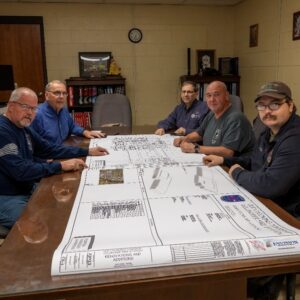
Mifflin County Academy Awarded Appalachian Regional Commission Funds

The Mifflin County Academy of Science and Technology was recently awarded an Appalachian Regional Commission (ARC) grant in the amount of $500,000 to support the school’s expansion project.

With the assistance of Delta Development Group, Inc. in Camp Hill, The Academy has secured over $7 million in state and federal funding to construct a heavy equipment/diesel technician training facility. The project will be located at The Academy’s existing campus at 700 Pitt Street, Lewistown, PA. The ARC funds will be used to purchase the heavy equipment utilized in the new programs.

“The goal of this expansion project is to provide local, affordable training opportunities and address the demand for a skilled workforce in rural PA,” explained Mike McMonigal, Supervisor of Adult Education at The Academy. “We are very grateful for the support of the Appalachian Regional Commission for investing in our local workforce development.”

The need for postsecondary education has been growing in recent years, as businesses report a lack of skilled workers to fill their open positions, and as the income gap between college and high school graduates widens. The need for a skilled workforce is also fueled by the manufacturing, construction, and transportation industries relying more heavily on technology. Employers in these industries and organizations are demanding that new hires and incumbent workers possess applicable skills and achieve industry certifications and licensures.

The Academy expansion project is expected to allow regional employers to create and fill currently vacant jobs rather than exporting related service work to other regions. This program will also help retain local talented youth who currently need to relocate to other areas to become properly trained to pursue these jobs. The Academy intends to train 20 students per program for a total of 40 students per year.

The Academy’s partnering employers estimate that they will be able to create 24 new jobs collectively in the first year that trainees are available. In total, these employers anticipate that during the nine-year analysis period, approximately 125 new jobs will be created, and 15 jobs will be retained.

SEDA-COG’s Betsy Lockwood, Director of Project Development and Grants, submitted the ARC application for the equipment on behalf of the Academy. The application itself was prepared by the Delta Development Group.

Regarding the benefits of the grant, Lockwood said, “The ARC investment into this project will enable industry sectors in the areas of transportation, warehousing, and construction to expand within Mifflin County and the SEDA-COG Region.”

The Appalachian Region Commission (ARC) is an economic development partnership agency of the federal government and 13 state governments including Pennsylvania.  PA’s Department of Community and Economic Development (DCED) partners with ARC to identify and support projects that will build community capacity and strengthen economic growth in the Appalachian counties of Pennsylvania to reach socioeconomic parity with the nation.

SEDA-COG is a community and economic development agency in Lewisburg and is one of seven Local Development Districts in Pennsylvania. SEDA-COG enhances the quality of life and economic advantage for residents and businesses in the 11 central Pennsylvania counties through its vital partnerships and initiatives.
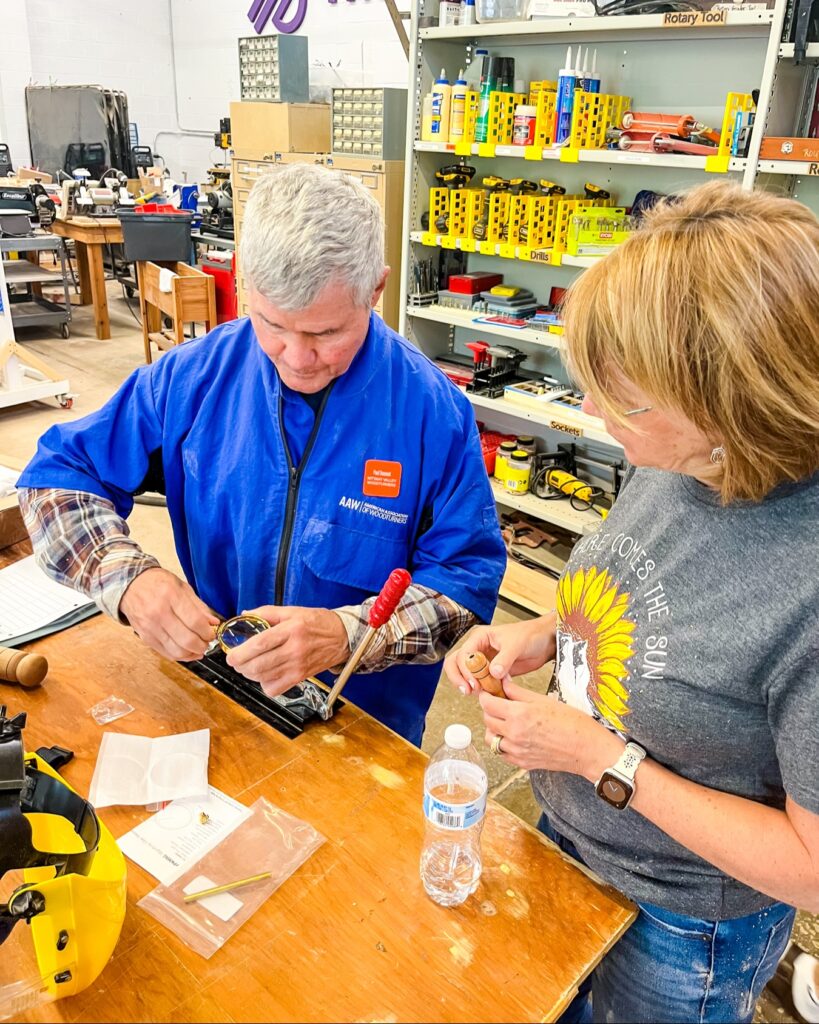
SUN-Tech Program Awarded Appalachian Regional Commission Funds

SUN Area Technical Institute (SUN-Tech) was recently awarded an Appalachian Regional Commission (ARC) grant in the amount of $85,088 for Mechatronics training equipment.

SUN-Tech, which serves Snyder, Union, and Northumberland County in Central PA recently added a Mechatronics Program to its list of course offerings.

There is a need for skilled and trained personnel in the Mechatronics field in the region. By adding a Mechatronics Program to SUN-Tech, and enhancing the program with industry standard equipment, students access to equipment and technology used in the field for Mechatronics training will translate into learned job skills to fill high priority positions in the region. These positions can earn $40,000 entry level, and $60,000 for experienced level, and are expected to see an increase in employment of around 8% by 2028.

The curriculum for this course will cover: Electrical Systems, National Electrical Code, Robotics, Circuits, Programmable Logic Controls, Electric Motor Controls, Pneumatics, Mechanical Power Transmissions, Fluid Power Systems, Troubleshooting and Repair. The program will be aligned to the Pennsylvania Department of Education (PDE) Program of Study for CIP Code 15.0403 and state approved industry credentials and NOCTI Exam (#8094).

Jobs in the mechatronics field include a variety of occupations which include engineers, mechanical engineers, hydraulic specialist, pneumatic specialists, PLC troubleshooting, maintenance managers, maintenance technicians, industrial maintenance automation technical/manager, and plant managers.

SEDA-COG’s Betsy Lockwood, Director of Project Development and Grants, submitted the ARC application for the equipment on behalf of SUN-Tech. Regarding the benefits of the grant, Lockwood said, “Considering the rapidly growing field of Mechatronics, it was imperative that our area have access to the latest and most advanced equipment, curriculum, and training aids to expand and strengthen skill development and ensure long-term employment success in central PA. I am thrilled for the innovation opportunity this provides SUN-Tech and for the adult learners and recent high school graduates who will be able to take part in this program.”

“SUN-Tech appreciates the generosity of the Appalachian Regional Commission. Their willingness to assist in funding this initiative will help our graduates secure meaningful employment opportunities that are significantly above entry level. With the help of the ARC and SEDA-COG, our students will possess real-world problem-solving skills, desirable technical competencies and be cross trained in several disciplines. Putting some of the most advanced training equipment that is on the market in their hands will be a big part of that training,” said David Bacher, SUN-Tech Administrative Director.

The Appalachian Region Commission (ARC) is an economic development partnership agency of the federal government and 13 state governments including Pennsylvania.  PA’s Department of Community and Economic Development (DCED) partners with ARC to identify and support projects that will build community capacity and strengthen economic growth in the Appalachian counties of Pennsylvania to reach socioeconomic parity with the nation.

SEDA-COG is a community and economic development agency in Lewisburg and is one of seven Local Development Districts in Pennsylvania. SEDA-COG enhances the quality of life and economic advantage for residents and businesses in the 11 central Pennsylvania counties through its vital partnerships and initiatives.

Walnut Street Culvert Stormwater Mitigation Project receives $60,000 in Appalachian Regional Commission Funds

The Walnut Street Culvert Stormwater Mitigation Project in the Town of Bloomsburg was recently awarded $60,000 from the Appalachian Regional Commission (ARC).

In December of 2019, the SEDA-COG Joint Rail Authority and a group of stakeholders from Columbia County began a process to evaluate ongoing stormwater and flooding issues along the State Route 11 corridor from Bloomsburg to Lime Ridge. The triggering point for this study was significant damage to major industries, commercial development, municipal infrastructure, and private property caused by intense flooding in 2018.

McTish, Kunkel and Associates was chosen as the engineering consultant to perform this study with the primary goal of identifying specific projects that could help to alleviate stormwater damage could threaten the viability of businesses located within flood prone areas. Stakeholders were clear in their guidance that they did not desire another study to put on a shelf. They wanted an actionable plan and tangible solutions to problems that have been on-going for decades.

Within the Town of Bloomsburg, Scott Township and South Centre Township, a total of 27 projects were identified by the consulting team and project stakeholders. Of the priority list developed from the study, the Walnut Street Culvert was listed as high priority for the Town of Bloomsburg.

As Kinney Run enters the Town of Bloomsburg, it first flows through a 48” culvert under Walnut Street then makes a sharp turn to the south and flows under Old Berwick Road via a 3.5’ high by 12’ wide box culvert. After a short distance, the stream makes a 90-degree bend to the west.  At this location, an overflow weir has been constructed. Once flows reach a high enough level that they overtop the weir, water is diverted south through a vegetated channel and then under the airport runway to the Susquehanna River through an 84” culvert. This diversion system was constructed following the 1972 Hurricane Agnes flood event.

It has become apparent over recent years that the culvert under Walnut Street needed to be replaced a with a new, larger culvert.

SEDA-COG’s Betsy Lockwood, Director of Project Development and Grants, submitted the ARC application for the culvert on behalf of the Town and Columbia County. Regarding the project, Lockwood said, “I am thrilled to start seeing projects develop from the original study. There were quite a few urgently needed projects identified, and I look forward to seeing what else we can accomplish from that list.”

The Appalachian Region Commission (ARC) is an economic development partnership agency of the federal government and 13 state governments including Pennsylvania.  PA’s Department of Community and Economic Development (DCED) partners with ARC to identify and support projects that will build community capacity and strengthen economic growth in the Appalachian counties of Pennsylvania to reach socioeconomic parity with the nation.

SEDA-COG is a community and economic development agency in Lewisburg and is one of seven Local Development Districts in Pennsylvania. SEDA-COG enhances the quality of life and economic advantage for residents and businesses in the 11 central Pennsylvania counties through its vital partnerships and initiatives.

Central Pennsylvania Institute of Science and Technology (CPI) receives $497,760 in Appalachian Regional Commission funds

SEDA-COG recently assisted the Central Pennsylvania Institute of Science and Technology (CPI) with an Appalachian Regional Commission (ARC) grant that was awarded in the amount of $497,760.

CPI is located in Centre County and serves a region that encompasses a 45-mile radius. According to their website, “founded in 1969, CPI was built to meet the career and technical needs of high school students in the Bald Eagle Area, Bellefonte Area, Penns Valley Area, and State College School Districts. Additionally, over 1,300 adult learners annually receive training to upgrade their current skills, learn new skills, or make a career change to better their quality of life.”

The ARC Funds will be used to purchase equipment to support the CPI Health Science Building Project. The new training facility, when complete, will create 1,095 direct jobs within the healthcare industries. The equipment will include surgery tables; training kits and stations; exam tables; EMS passenger responder electric vehicle and charging station; ultrasound equipment; stretchers and traction tables. The training facility will allow CPI to expand its healthcare educational programming to train the workforce in the region to meet the unmet demands for skilled workforce.

“We are very excited and pleased to have worked with SEDA-COG to secure ARC grant funding to support equipment in the Health Sciences Buildings and for our existing healthcare programs” said Todd Taylor, Vice President of Post-Secondary Education for CPI. “ARC grant funding will help us provide students throughout central Pennsylvania with highly technical training leading to careers in the high-growth healthcare employment sector,” said Taylor. The new facility will increase CPI’s capacity to 800 students. It is anticipated that 374 students will graduate on an annual basis and will immediately become employed within the healthcare industries.

The nation continues to be confronted with unmet demands for a trained workforce. Covid-19 has placed a greater demand on all industries. Prior to Covid-19, the United States was already facing a huge shortage in skilled, licensed healthcare workers. According to the Bureau of Labor and Statistics (BLS), the U.S. will need to hire more than 2.3 million healthcare workers by 2025 to take care of our aging population. More specifically, the United States will be short 446,300 home health aides, 98,700 medical and lab technicians, 95,000 nursing assistants, and 29,400 nurse practitioners in 2025.

SEDA-COG’s Betsy Lockwood, Director of Project Development and Grants, applied for this grant on behalf of the Institute.

On the grant’s benefits, Lockwood said, “The ARC investment in this project will enable healthcare facilities to secure a trained workforce to fill their unmet needs. It will also expand and strengthen community systems (education, healthcare, housing, childcare, and others) that help our community members obtain a job, stay on the job, and advance a long, financially sustaining career pathway.”

Delta Development Group, Inc. aided with the preparation of the grant. To date, Delta has assisted CPI with the original market study to determine the need for new post-secondary training programs, and secured over $14.5 million in federal and state grant/loan funding for the actual construction of the Health Sciences Building.

SEDA-COG is a community and economic development agency in Lewisburg and is one of seven Local Development Districts in Pennsylvania. SEDA-COG enhances the quality of life and economic advantage for residents and businesses in the 11 central Pennsylvania counties through its vital partnerships and initiatives.