City of Sunbury Receives $1M Grant to Support Phase-two of the Susquehanna Avenue Stormwater and Sewer Separation Project

Lewisburg, PA — With the assistance of SEDA-Council of Governments (SEDA-COG), The City of Sunbury was awarded $1,000,000 through the Pennsylvania Department of Community and Economic Development’s (DCED) 2024 Community Development Block Grant (CDBG) Discretionary Program for Phase Two of the Susquehanna Avenue Stormwater and Sewer Separation Project.

The city’s aging water distribution system, which supplies drinking water and supports firefighting through hydrants, needs repairs to ensure an adequate supply for both uses. The sewage system, which does not separate stormwater from sewage, is also outdated, and its pipes are too small to handle increased flow during heavy rain. During storms, the system and the city’s treatment plant become overwhelmed, causing flooding and sewage backups into streets and properties.

Phase Two will continue work started in Phase One, which covered Susquehanna Avenue from Reagan Street to Packer Street, by upgrading the water and sewer systems along Susquehanna Avenue from Packer Street to Julia Street and sewer separation on Fort Augusta Avenue.

Crews will replace old sewer pipes that are cracked and too small for today’s needs. It will also build a separate stormwater system with new storm drains to help water flow off streets. The upgraded water system will include new mains, shut-off valves, fire hydrants, and connections to homes and businesses. Once the underground construction is completed, work will begin to rebuild the street, curbs, and sidewalks along Susquehanna Avenue.

In addition, improvements will be made to the Reagan Street pump station to handle more flow and reduce costs. And a previously closed drainage structure will be reopened to help the city’s stormwater system manage heavy rain more effectively.

Work is expected to being in Spring 2026 and last through November 2026.

Upon completion, the upgraded water system will ensure safe drinking water and reliable fire protection for the City’s residents and businesses. The construction of a separate stormwater system and upgrades to the sewer system will keep rainwater and wastewater separated, reducing strain on the treatment plant and helping prevent flooding and sewage backups during heavy storms.

Susquehanna Avenue is the only access point to the former Celotex property, which the city is redeveloping to attract new industry and create jobs. These infrastructure improvements will help advance those efforts.

The application for funding was prepared and submitted by SEDA-COG on behalf of the City of Sunbury and was supported by local stakeholders and state and federal officials including U.S. Rep. Dan Meuser, state Sen. Lynda Schlegel Culver, state Rep. Michael Stender, the Northumberland County Planning office, and the Sunbury Municipal Authority, who offered letters of support for the application.

“Sunbury has been working hard to modernize its aging water and sewer infrastructure, and this grant is an important step forward,” said U.S. Rep. Dan Meuser. “Upgrading these outdated systems will protect homes and businesses from flooding, improve water quality and fire protection, and strengthen the city’s ability to attract new employers to the former Celotex site. I was glad to support the City’s application, and I appreciate SEDA-COG and our state and local partners for their commitment to Sunbury’s long-term growth.”

The total project cost for Phase Two is $5.5 million. Additional funding is being provided through the City’s 2023 and 2024 CDBG allocations, federal appropriations through Rep. Dan Meuser’s office, local matching funds, an H20 grant, and Northumberland County ARPA funds.

The 2024 CDBG Discretionary funds awarded for this project are part of more than $6.2 million in Community Development Block Grant allocations distributed by the Pennsylvania Department of Community and Economic Development to communities across the Commonwealth.

“The Shapiro Administration understands the importance of making investments through CDBG and similar programs to create safe and healthy communities for all Pennsylvanians to live, work, and play, and these awards help make that vision a reality,” said DCED Secretary Rick Siger in the press release issued by DCED. “We will continue to make investments like these that address the most critical needs facing our communities.”

About SEDA-COG
SEDA-COG is a community and economic development agency in Lewisburg and is one of seven Local Development Districts in Pennsylvania. SEDA-COG enhances the quality of life and economic advantage for residents and businesses in the 11 central Pennsylvania counties through its vital partnerships and initiatives.


Centre County Secures $1.23M in State Funding for Eagle Creek Sewer Project

Lewisburg, PA — With the assistance of SEDA-Council of Governments (SEDA-COG), Centre County was awarded $1,235,000 through the Pennsylvania Department of Community and Economic Development’s (DCED) 2024 Community Development Block Grant (CDBG) Discretionary Program to fund the Eagle Creek Sewer project, a critical infrastructure upgrade that will protect public health and preserve affordable housing.

Eagle Creek is a unique mobile home community where residents own both their homes and the land beneath them. Currently, the community relies on an aging on-site wastewater treatment plant managed by the homeowner’s association.

This investment will address long-standing regulatory concerns with the on-site wastewater treatment plant by connecting the Eagle Creek community to the public sewer system operated by Mid-Centre Authority in Unionville Borough, ensuring a reliable, modern wastewater solution.

Affordable housing is essential to maintaining stability for families, supporting the local workforce, and fostering economic growth. Without this CDBG funding, costs for residents would have increased 240% above the area’s affordability rate, threatening the loss of affordable housing options in Centre County.

This project safeguards the health and financial security of Eagle Creek residents, preserves affordable housing, and strengthens the region’s infrastructure, ensuring long-term sustainability and improving quality of life for the greater Centre County community.

The application for funding was prepared and submitted by SEDA-COG on behalf of Centre County and was supported by residents, local leaders, and state and federal legislators, including U.S. Rep. Glenn “GT” Thompson, Pennsylvania Sen. Cris Dush, Pennsylvania Sen. Wayne Langerholc, and Pennsylvania Rep. Paul Takac who provided letters of support for the application.

“Connecting to the existing public sewer system is the solution for the long-term,” said U.S. Rep. Glenn “GT” Thompson. “Through partnerships at the local, state, and federal level we can continue to innovate and adapt when it comes to affordable housing solutions in our growing region.”

In a separate statement, state Rep. Paul Takac said, “This funding is essential to keeping service costs reasonable for the homeowners while addressing critical infrastructure issues. A well-functioning sewer system is among the most essential elements of a community’s overall health and well-being.”

These funds are part of more than $6.2 million in Community Development Block Grant funding awarded by the Pennsylvania Department of Community and Economic Development across the Commonwealth.

“The Shapiro Administration understands the importance of making investments through CDBG and similar programs to create safe and healthy communities for all Pennsylvanians to live, work, and play, and these awards help make that vision a reality,” said DCED Secretary Rick Siger in the press release issued by DCED. “We will continue to make investments like these that address the most critical needs facing our communities.”

About SEDA-COG
SEDA-COG is a community and economic development agency in Lewisburg and is one of seven Local Development Districts in Pennsylvania. SEDA-COG enhances the quality of life and economic advantage for residents and businesses in the 11 central Pennsylvania counties through its vital partnerships and initiatives.
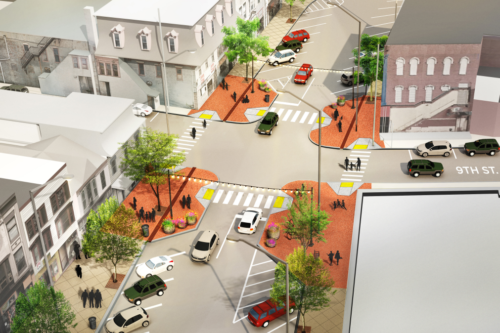
SEDA-COG Leads Successful Flood Maps Appeal, Easing Insurance Burdens in Shamokin

Lewisburg, PA — The City of Shamokin, in partnership with SEDA–Council of Governments (SEDA-COG), has successfully resolved its appeal of FEMA’s preliminary Flood Insurance Rate Maps. This achievement ensures more accurate flood zone designations and delivers significant financial relief for residents and businesses, helping reduce uncertainty for homeowners and encouraging future reinvestment downtown.

FEMA’s preliminary maps, released in 2021, expanded areas shown as high-risk compared with the prior maps. The City of Shamokin immediately brought these concerns to the attention of SEDA-COG, recognizing the potential financial impact on residents and local redevelopment.

Working together, the City and SEDA-COG coordinated with the Pennsylvania Department of Community and Economic Development to secure Act 47 Implementation funding for an independent Hydrology & Hydraulics study of the Shamokin Creek basin, completed by a qualified engineering consultant.

The 2021 preliminary maps would have expanded high-risk flood zones across the City, requiring many property owners to purchase flood insurance for the first time and potentially complicating property sales, permitting, and redevelopment.

SEDA-COG prepared and submitted the City’s technical appeal to FEMA on Feb. 10, 2023. On Sept. 30, 2025, FEMA issued revised preliminary maps for Shamokin that closely align with the City’s study, indicating FEMA’s incorporation of the City’s technical data.

The City and SEDA-COG view this as a major success that will reduce the number of properties subject to mandatory flood-insurance requirements compared to the 2021 preliminary maps.

The revised maps now provide a more accurate representation of the community’s actual flood risk, ensuring that only properties truly vulnerable to flooding are identified within the high-risk zones.

Next, FEMA will issue a Letter of Final Determination. The letter starts a six-month period for the City to adopt updated ordinances and for the new maps to take effect.

Residents may review the revised preliminary maps and should plan to speak with their insurance agent or lender once the maps are effective. Properties located in high-risk flood zones may be eligible for discounted or grandfathered insurance options under National Flood Insurance Program rules. These options are available through your insurance agent.

“This is a major win for Shamokin,” said Mayor Mike McLaughlin. “Accurate maps mean fair treatment for our residents and smarter planning for our future. We’re grateful for SEDA-COG’s technical support and the engineering firm’s study.”

“This result shows the real power of collaboration,” said Betsy Kramer, program manager, Community Revitalization at SEDA-COG. “By combining sound science, local knowledge, and strong partnerships, Shamokin achieved one of the best possible outcomes, a more accurate map that protects both residents and the city’s long-term revitalization efforts.”

“This effort was possible because Shamokin’s leadership recognized that addressing flood risk was essential to the City’s long-term recovery,” Kramer said. “SEDA-COG worked with the City to demonstrate that this project was integral to restoring economic stability and supporting its successful exit from financial distress. We’re always glad to share lessons learned and help other communities strengthen their own resiliency planning.”

Municipal leaders who are interested in learning more about the process or exploring potential resources to strengthen their own flood resiliency efforts are encouraged to contact Alimara (Ali) Cassidy, community resiliency project coordinator with SEDA-COG, at alimara.cassidy@seda-cog.org.

About SEDA-COG
SEDA-COG is a community and economic development agency in Lewisburg and is one of seven Local Development Districts in Pennsylvania. SEDA-COG enhances the quality of life and economic advantage for residents and businesses in the 11 central Pennsylvania counties through its vital partnerships and initiatives.

ARC Accepting Applications for Summer Study Programs in Entrepreneurship and STEM for Region’s Middle and High School Students

Applications are due December 3rd for Appalachian Entrepreneurship Academy and Appalachian STEM Academy.  

WASHINGTON, D.C., October 16, 2025 – Today, the Appalachian Regional Commission (ARC) opened applications for two summer study opportunities: the Appalachian Entrepreneurship Academy (AEA) and the Appalachian STEM Academy at Oak Ridge. Both programs, planned for summer 2026 and subject to available funding, are free intensive learning experiences specifically for the Appalachian Region’s high school and/or middle school students and teachers.  

TheAppalachian Entrepreneurship Academy (AEA), developed in partnership with Appalachian State University and STEM West, prepares the next generation of regional entrepreneurial leaders and thinkers. High school students from across Appalachia will be selected to participate in a comprehensive learning curriculum designed to sharpen business and economic development acumen and develop skills essential for entrepreneurial success. The students will have the opportunity to develop and implement business ideas, refine and prototype those ideas, and deliver a pitch presentation for an audience of entrepreneurs. AEA will be held from July 11-24, 2026, at Appalachian State University in Boone, North Carolina. 

TheAppalachian STEM Academy is a hands-on learning experience for Appalachia’s middle and high school students, as well as high school teachers in STEM-related fields. Hosted by  Oak Ridge Associated Universities in Oak Ridge, Tennessee, this program is a gateway to science, technology, engineering and math (STEM) in the Appalachian Region. High school participants will work with award-winning scientists at Oak Ridge National Laboratory, and both high school and middle school students will conduct guided group science, math, computer science, and technology research projects. High school teachers will work with science practitioners to develop STEM-related curriculum. Many students gain their first exposure to applied science and STEM education through this experience.  STEM Academy sessions will take place on the following dates: 

  • Middle School STEM Academy Session 1: July 11-17, 2026 
  • Middle School STEM Academy Session 2: July 18-24, 2026  
  • High School STEM Academy: July 11-24, 2026 

Applications for both opportunities are due December 3, 2025.  

“Appalachia is home to hardworking and ambitious students who will hopefully one day be leaders across the region,” said ARC Federal Co-Chair Gayle Manchin. “When we invest in Appalachia’s students, we invest in thoughtful growth for the region’s workforce and a strong economic future. I will be excited to see all the energy and accomplishments of the next classes of ARC’s Appalachian STEM Academy and Appalachian Entrepreneurship Academy.” 

About the Appalachian Regional Commission 
The Appalachian Regional Commission is an economic development entity of the federal government and 13 state governments focusing on 423 counties across the Appalachian Region. ARC’s mission is to innovate, partner, and invest to build community capacity and strengthen economic growth in Appalachia to help the region achieve socioeconomic parity with the nation.